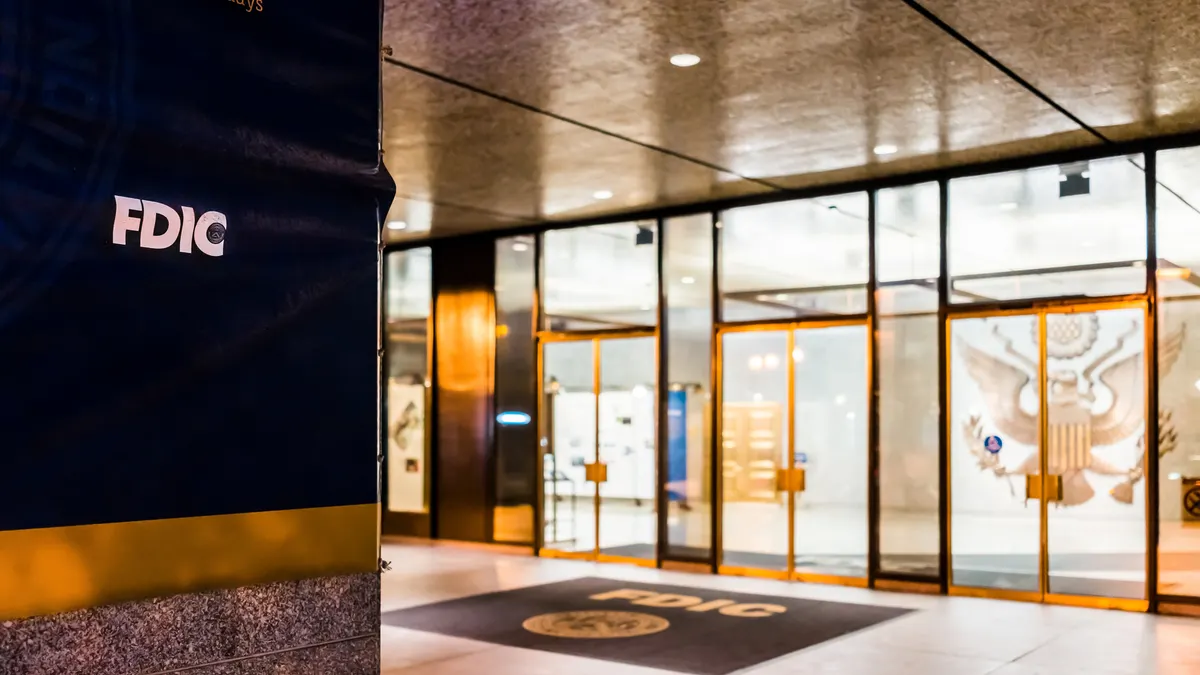
Rent fintech Flex has applied with the Federal Deposit Insurance Corp. and Utah Department of Financial Institutions to become an industrial bank, the company announced Friday.
“A bank charter allows us to build directly on a foundation of federal deposit insurance and full state and federal bank regulatory oversight, strengthening the products millions of renters already rely on,” Shragie Lichtenstein, CEO and co-founder of Flex, said in a statement. “Rent is the single biggest bill in most people’s lives, and it’s often the one least adapted to how they’re actually paid. This charter gives us a permanent, regulated foundation to keep closing that gap.”
Jeff Berkson – who until May served as chief risk officer at WebBank, according to LinkedIn – will be Flex Bank’s proposed CEO. The bank will be based in the Salt Lake City area and operate nationally through digital channels.
The bank would issue Flex’s core credit products, including the flexible payment solution Flex Rent, directly to customers.
Flex has processed more than $40 billion in rent since 2019 for more than 3.2 million users, and has helped them avoid more than $780 million in late fees, the company said, adding that it does not compound interest or permit the stacking of loans.
Trump-era regulators have seen a sharp increase in new charter applications. FDIC Chair Travis Hill last year touted the industrial loan company charter as one of a handful of ways to boost the establishment of new banks.
Buy now, pay later juggernaut Klarna applied this month for an ILC charter. Car maker Stellantis received approval in May to launch an ILC and other automotive stalwarts, including Ford and GM, got green lights in January. Investment firm Edward Jones followed in February.
Some lawmakers, with backing from the banking industry, have argued that an ILC charter exempts companies from the definition of a “bank” under the Bank Holding Company Act. As long as ILCs don’t offer demand deposit accounts, they can bypass oversight by the Federal Reserve, the politicians contend.
In January, Sens. John Kennedy, R-LA, and Andy Kim, D-NJ, introduced a bill to close what they called the “shadow banking loophole.” The bill is now sitting with the Senate Banking Committee.
The trade group Independent Community Bankers of America said in May that cutting the Fed out of ILC supervision “leav[es] a dangerous gap in safety and soundness oversight and introducing unnecessary systemic risk into the banking system.”
Last year, Kim and Sen. Elizabeth Warren, D-MA, proposed a moratorium on commercially owned ILC charters until such entities are defined as “banks” under the BHC Act.
The ILC isn’t the only charter that has seen refreshed interest since President Donald Trump reentered the White House. The Office of the Comptroller of the Currency has seen an uptick in applications for national trust charters, popular among cryptocurrency firms. A handful of fintechs – including Upstart, Mercury and Valt Bank – have opted to try for full bank charters.
Flex currently uses Lead Bank and Column Bank as its sponsor banks. An ILC charter for Flex would make those partnerships unnecessary.