If observers need proof that, despite Tuesday’s election results, the banking sector still must be mindful of the White House’ current occupant, they should look no further than Goldman Sachs’ biannual partner announcement.
The bank named 109 new partners Thursday, its largest class since 2010. But the announcement featured no statistical breakdown of how many women were promoted. Or what proportion of new partners are Black, Asian, Hispanic or otherwise.
Such metrics were typically highlighted – even in 2024, when Goldman announced its previous partner class two days after President Donald Trump was reelected.
For the record, that class – among its 95 partners – featured 26 women, 17 Asians, six with a Hispanic or Latinx background, four Black people and three veterans, according to the bank.
This year, observers are left to guess, if it matters to them. Bloomberg estimated Thursday that less than 20% of the new class are women, the lowest proportion since 2014. By comparison, the 26 women named partner in 2024 accounted for 27% of the class.
“We’ve made meaningful progress over the past few years, and we remain focused on ensuring all our exceptional talent has the opportunity to achieve at the highest levels,” Goldman spokesperson Tony Fratto told Bloomberg. “Since David became CEO, the percentage of women in the partnership has increased 30%. And with this class, the partnership will have the highest ever percentage and number of women.”
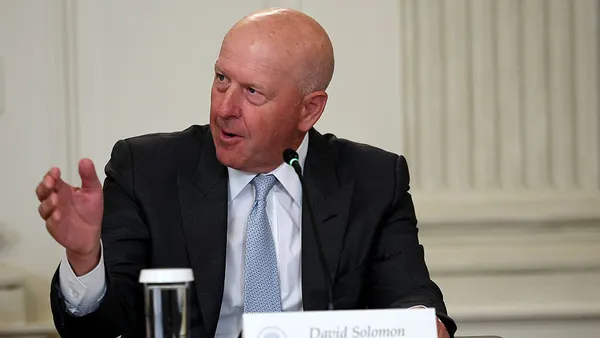
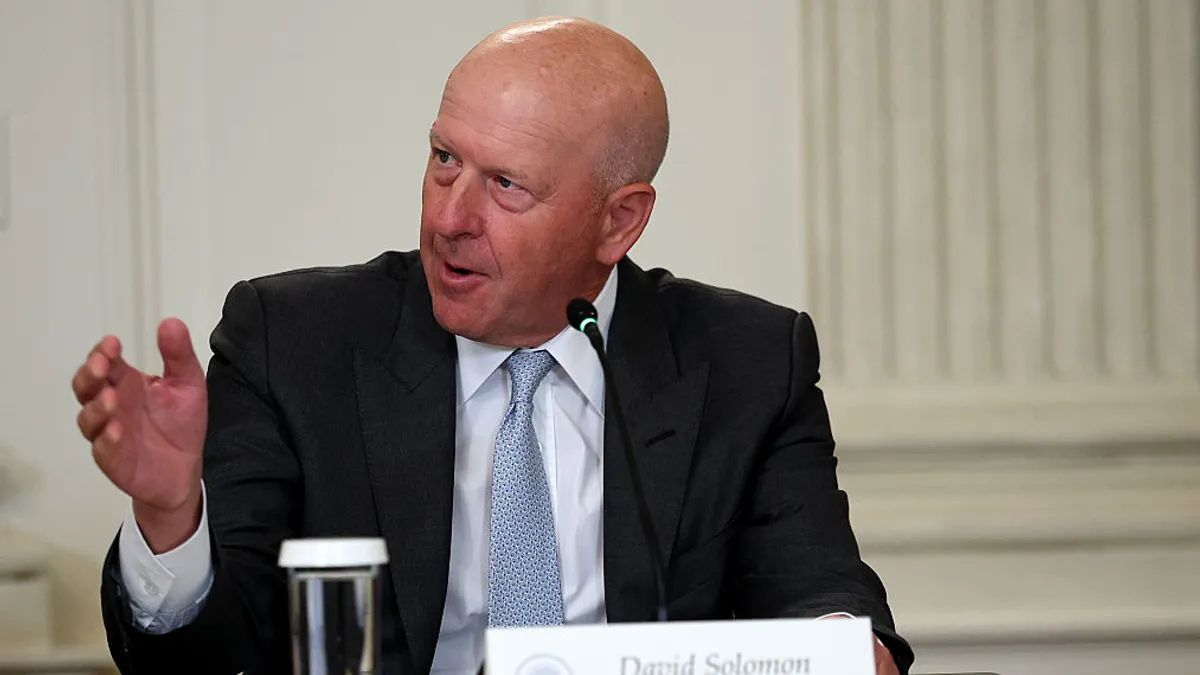
Indeed, when CEO David Solomon – then one year into his stint as Goldman’s chief executive – testified in front of lawmakers in 2019, he said “a core part” of his tenure at the top of the bank would “be defined by our progress” on diversity.
When asked why Goldman didn’t detail the demographic breakdown of its partner class, one executive told the Financial Times anonymously that the legal environment had changed. Read: Trump-era regulators still have two years to penalize any bank deemed to be violating the January 2025 executive order that called out diversity, equity and inclusion efforts as “illegal and immoral discrimination programs.”
Fratto, as early as February 2025, cited “legal developments” as Goldman’s reasoning behind scrubbing DEI references from the bank’s annual filings.
But in 2025, Goldman still highlighted diversity in some public statements.
“We strongly believe that merit and diversity are not mutually exclusive,” Solomon said in February 2025. “Our people are a powerful example of that, and that’s why we will continue to focus on the importance of attracting and retaining diverse, exceptional talent.”
To that point, the bank included a demographic breakdown in its November 2025 announcement of a new class of managing directors, the level below partner. Women comprised 27% of that class. Also, 31% of that class identified as Asian, 3% Black, 4% Hispanic, 3% LGBTQ+ and 51% White.
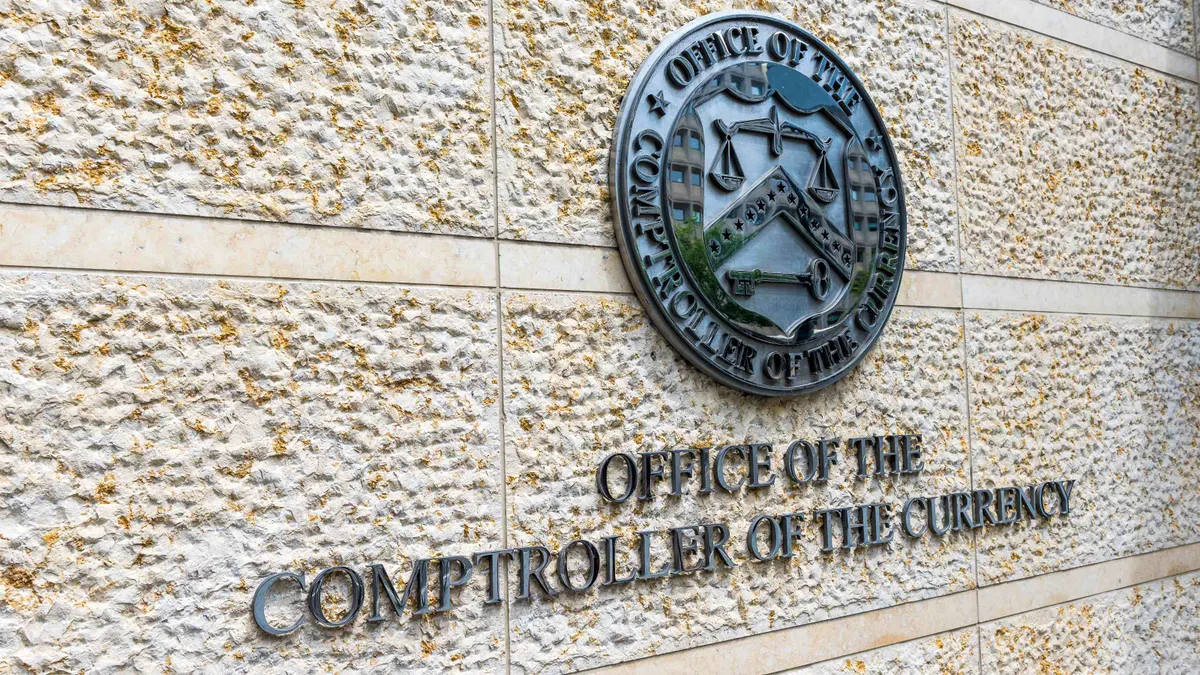
So, what changed between 2025 and 2026? For one, Trump-era regulators have shown themselves unafraid to spotlight bank activity that runs counter to the administration’s agenda. The Office of the Comptroller of the Currency, for example, last month issued a 47-page report on debanking, citing specific examples by nine banks. Highlighting diversity is not the same as debanking, but this administration has described each as “discrimination,” so the threat of action may be an A-to-A jump in logic.
No bank has seen a penalty from a regulator as yet on debanking grounds. But Trump, or lawyers connected to him, has sued JPMorgan Chase and Capital One on such allegations. And Bank of America – the first bank Trump accused of debanking during his second term – just saw $1.2 billion in penalties levied against it (over anti-money laundering flaws, allegedly).
Goldman, presumably, would rather stay out of that fray.
This is not to say that Goldman no longer values diversity. But if it does, it’s keeping quiet what it used to say out loud. Maybe all Goldman needs is to stay mum for another two years.
The bank did break down its partner class by other metrics Thursday. About 39% joined Goldman out of college, the bank said. Roughly 28% were summer interns. Sixty-two are based in the Americas, 20 from Asia, and 27 from Europe, the Middle East and Africa.
By looking at the published list, roughly 30% of the new class comes from the bank’s asset-and-wealth management division. And a record 13 new partners are engineers, a testament to the rise in importance of technology – specifically, artificial intelligence – to banking’s future. By comparison, 2024’s partner class featured eight engineers.
The promotions, effective Jan. 1, “[reflect] our commitment to elevating leaders who have distinguished themselves through their differentiated impact on our global franchise and ongoing focus on managing risk effectively, while consistently embodying our core values and actively investing in the growth and development of our people,” Solomon and Goldman President John Waldron said in a statement Thursday.
Goldman partners can expect to earn around $1 million in salary, with upside through bonuses that include company shares and access to profits from private investment funds.
And there’s the prestige that comes with the partner title, a vestige from last century, when Goldman was still privately owned.
While the demographic breakdown of Thursday’s new partners remains gray, the makeup of the partner echelon in general is set to have more women than ever, Bloomberg estimated. That’s because men generally have been leaving Goldman or retiring faster than women have in recent years. The 109 promotions are set to give the bank roughly 500 partners overall. Roughly 21% of them are women, Bloomberg noted.