As artificial intelligence poses a bigger threat to the banking industry, lenders need to emphasize their human element to maintain customer relationships.
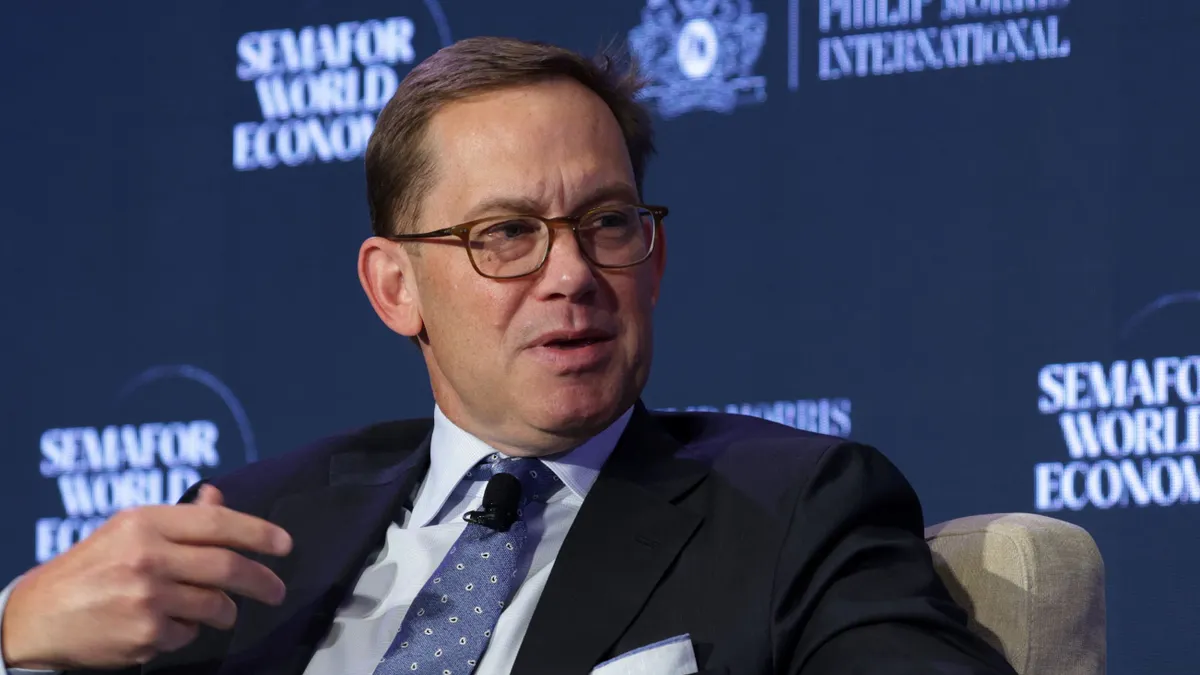
That’s according to Udi Ziv, the CEO of Personetics, a fintech that provides banks and credit unions with insights, data analysis and relationship management tools.
The human channel “is the biggest moat or the biggest differentiator the banks have” versus large language models and AI agents, Ziv said during an interview at last month’s Money20/20 conference in Las Vegas.
“The human side of the bank, when it comes to relationships, is extremely important,” and banks are investing in that with more branches and banker hires, he said.
Personetics counts half of the top 40 retail banks in North America as customers, Ziv said, including Truist, Huntington and Royal Bank of Canada. KeyBank, for one, uses New York-based Personetics to provide customers with increased transaction detail.
With AI tools going from analysis to action, big banks JPMorgan Chase, Bank of America and Citi have blocked AI agent access to customer accounts. Wells Fargo is informing customers of their responsibility when using AI tools. PNC CEO Bill Demchak, for his part, has said agent-only transactions will never happen.
Banks face moderate risk from AI-related business disruption over the next five years, largely due to “increased technological competition on processes and products,” Fitch Ratings said Oct. 22.
Customers linking their bank accounts to large language models is “an existential threat to the industry,” Ziv said, because it could disintermediate banks’ relationships with customers and turn lenders into “an invisible utility.”
He pointed to the telecommunications industry, saying companies Verizon, AT&T and T-Mobile owned customer relationships until Apple’s iPhone came along.
“That's the risk that banks are facing,” Ziv said. “It’s not that they're not going to exist. It's just that they're going to be completely commoditized because someone else is going to own the relationship, and owning the relationship is where the real battle lies.”
Banks may cite safety and security reasons to block agents, but fear of losing business is the greater concern, Ziv said. “These very large banks are saying, we're not ready for this,” he said.
Bank executives have also faced a number of queries this year over AI-driven cash optimization. Agents moving deposits in search of higher yield would hamper banks’ pursuit of primacy, Ziv said.
Over time, it’s unlikely a single entity will own the entire customer relationship, said Zach Perret, the CEO of data aggregation fintech Plaid. Customers may want the ability to handle certain bank functions through AI platforms, while preferring direct interaction with the bank for other tasks, he said at Money20/20.
Ziv said it’s not “game over” for banks, which have their own competitive moats, he said.
Those include breadth and depth of financial data, which LLMs don’t have because banks don't have to give that data away via open banking, and the ability to serve customers in various ways, including human channels such as relationship managers, branches and call centers, he said.
Indeed, a JPMorgan Chase billboard in Charlotte, North Carolina, on Oct. 31 advertised, “Money questions. Human answers.”
“Is AI a threat or an opportunity? I think it's both,” Ziv said.
For Personetics, it’s the latter, “because it's presenting a very significant threat to the industry we serve, and we're here to … help it overcome,” he said.
Banks may look to build their own AI agent in response to Meta’s Muse or OpenAI’s dots, although “if the agents are not in sync with everything else that's happening within the bank, it's useless,” Ziv said.
A recently released Personetics product uses transaction intelligence to suggest to bankers which customers to approach and highlights risks and opportunities with those customers. It’s designed to help banks better compete with intelligent but one-dimensional LLMs, according to Ziv.
The fintech aims to give bank customers the ability “to orchestrate the relationship across all of the different touch points, all the different channels,” he said.