It’s been two years since Nathan Flatt could access the roughly $10,000 he had accumulated in his account on Yotta, a savings gamification app he used to save money for a pickup truck.
Convinced that his funds were insured, encouraged by the Federal Deposit Insurance Corp. logo on Yotta’s website, he diligently squirreled away $500 a month, until he and others were locked away from accessing their funds after Yotta’s middleware partner, Synapse, went bankrupt.
Flatt is one of many former Yotta customers — and customers of Synapse’s other fintech partners, including Juno — cumulatively out millions of dollars.
The California Department of Financial Protection and Innovation on Friday became the first regulator to fine Yotta for its part in the debacle, fining the fintech $1 million and ordering the company to notify its California-based customers with information on how they may obtain relief from the Consumer Financial Protection Bureau’s civil penalty fund.
The CFPB fined Synapse $1 last August, enabling the watchdog to access the civil penalty fund to redress harm to customers. A spokesperson at the time told Banking Dive that the agency was moving forward to ensure victims receive restitution from the civil penalty fund in “an expedited manner.” Funds have yet to be distributed.
While some customers were able to get funds back through a resolution process in November 2024, many – including Flatt – say they’ve not received one penny.
As customers remain caught in the crosshairs of a litigious fight ensnaring Yotta, Synapse and banking partner Evolve Bank & Trust, with each party pointing fingers at the others, the DFPI has determined that at least some of the blame falls on Yotta.
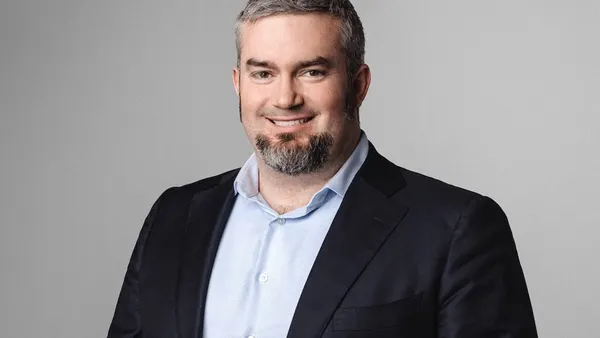
“Yotta blatantly deceived thousands of California customers regarding the risk to their accounts,” DFPI Commissioner KC Mohseni said in a prepared statement Friday. “It enticed customers to use its financial products and services under false pretenses, ultimately resulting in millions of dollars in lost funds.”
Yotta founder Adam Moelis declined to comment on the matter.
Meanwhile, Flatt, who owns rental properties in Indiana but lived in Sacramento when he was using Yotta, looks back on the money in limbo and feels duped. He’s lost small sums of money in prior business ventures, and said loss “comes with the territory.”
“That didn’t feel good either, but I was able to still have control over some of that,” he said – unlike his Yotta funds loss. He said he’s reached out to the involved firms, and federal financial regulators. His efforts have yielded nothing.
Ren Lescault, a Yotta user previously based in Irvine, is still out roughly $30,000 – money he and his wife had seen as their fresh-start fund after climbing out of medical debt tied to three brain surgeries she’d undergone.
Lescault learned about Yotta as a high-yield savings option after watching real estate investment influencer Graham Stephan’s now-deleted video titled “I Just Bought a Bank,” which promoted the app. (Several Yotta customers Banking Dive has previously spoken with also said they put their money into Yotta after Stephan’s endorsement.)
Lescault and his wife moved internationally for school and work in 2024. Without access to their savings, however, they put many moving expenses on credit.
Funds from the Synapse reconciliation were of no use: He said he only received $1.
“It’s so frustrating to, for the first time in our life, have a savings account, have the ability to go and live our dream, and now it's more or less gone again,” Lescault said. “We're sort of stuck in place in debt, and living a very different experience than what we expected.”
Lescault, like many others, has reached out to financial regulators and the firms involved. He said he’d like to see further legal action taken against Yotta, Synapse and the involved banks.
Synapse and Yotta leaders “got a golden parachute, and they're onto their next C-suite job after screwing us out of all this money,” he alleged.“Number one, obviously, I want all of us to be paid whole, but then some sort of legal recompense for the people that got to just walk away and be fine.”
The $1 million fine, he said, feels “inappropriate.”
“That money isn't going to go to the impacted people. It's not going to reconcile the accounts, it's not going to actually fix what happened. It’s just a, ‘you screwed up, here's a penalty,’” he said. “It's incredibly disappointing that the first real action is a nominal rounding error-sized penalty to this thing that has outed so many people of money.”